Jellyfish Safety in Langkawi: What Every Traveler Needs to Know
Langkawi's crystal-clear turquoise waters and pristine beaches draw travelers from around the world. The archipelago's sheltered bays offer seemingly perfect swimming conditions, warm, calm, and inviting. But beneath this idyllic surface lies a serious risk that every visitor must understand: jellyfish.
Jellyfish stings represent one of the documented health threats to travelers in Langkawi. While most encounters result in mild discomfort, the confirmed presence of highly venomous Box Jellyfish has elevated this from a minor nuisance to a critical public health concern. Recent tragedies, including the death of a two-year-old child at Pantai Cenang, serve as stark reminders of how quickly these encounters can turn fatal.
Is Langkawi's Water Safe for Swimming?
Yes, Langkawi’s waters are generally safe for swimming and beach activities, but visitors should still be cautious due to the presence of jellyfish. Local authorities actively monitor the beach conditions and provide timely advisories, especially during periods when jellyfish are more commonly spotted.
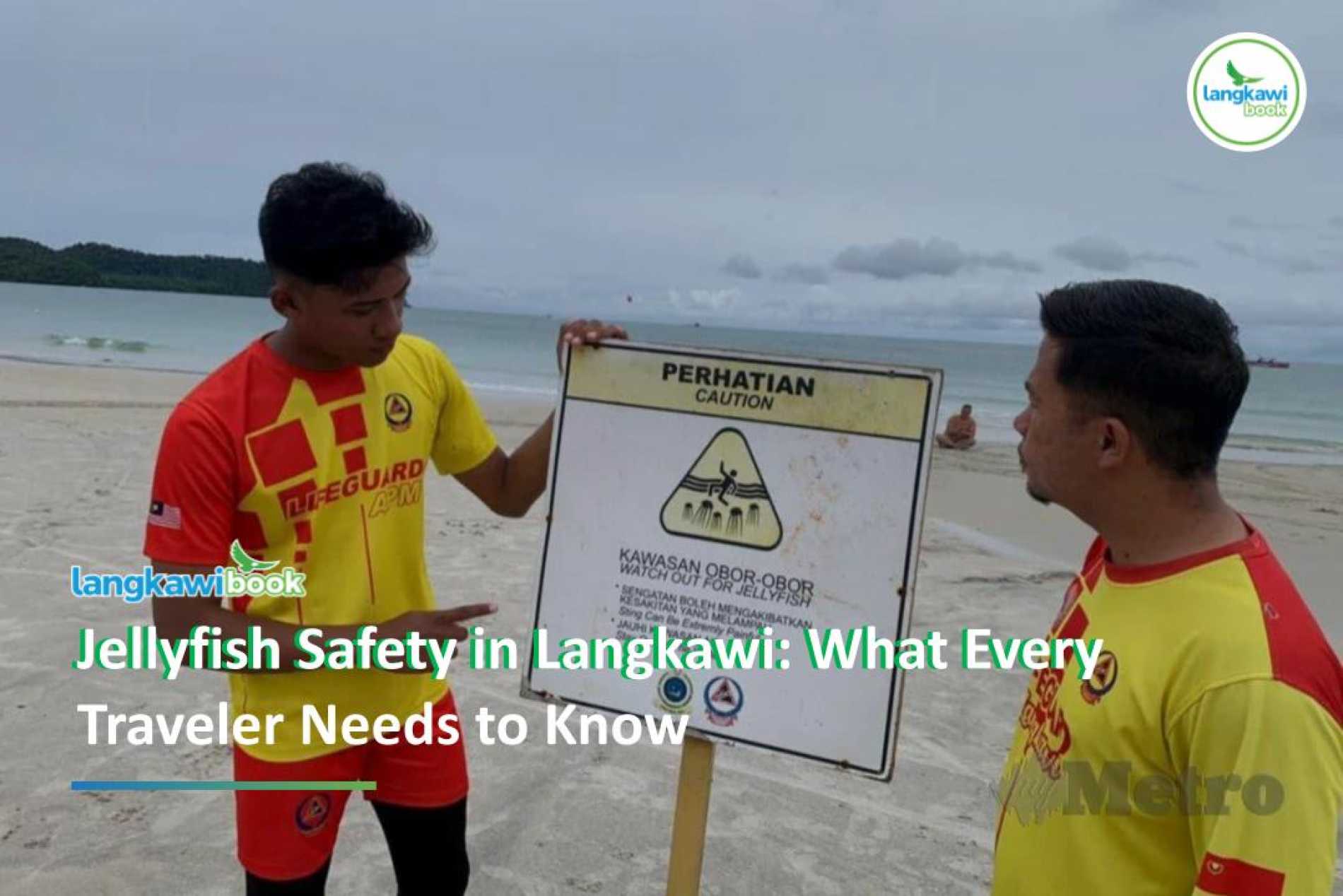
Warning signs and guidance are placed at affected beaches, and popular swimming areas are managed to ensure visitor safety. By following posted notices and local advice, visitors can enjoy Langkawi’s beaches with confidence and peace of mind.
Understanding Jellyfish Season in Langkawi
While the beaches in Langkawi are generally safe for visitors, it’s also important for every traveller to exercise caution. The key to safety lies in three actions: understanding when and where jellyfish are most prevalent, recognizing warning signs, and wearing protective gear such as swim leggings or stinger suits.
Jellyfish presence in Langkawi fluctuates throughout the year based on environmental conditions and seasonal patterns:
Peak Risk Periods:
- Based on Hospital data (2012-2014) shows the highest incidence of stings in July, October, November, and December. The surge in November and December correlates with school holiday periods where tourist numbers and water exposure dramatically increase.
- Alternative advisories suggest heightened risk from January through June, indicating year-round vigilance is necessary.
- Environmental Triggers: Monsoon transitions and shifting sea currents push Box Jellyfish closer to shore. Authorities specifically warn against swimming after heavy rainfall, as freshwater runoff carries nutrients into the sea, potentially attracting jellyfish through increased food availability.
The bottom line: There is no truly "safe" season. The risk of jellyfish exists year-round, with seasonal variations in intensity.
Are there Box Jellyfish in Langkawi?
Yes, box jellyfish can be present in Langkawi waters, but encounters are rare. They are not constantly found around Langkawi’s beaches, and most visitors never see one. However, confirmed cases of box jellyfish stings have occurred in Langkawi.
In Langkawi, box jellyfish are considered a low-probability but high-consequence risk. Box Jellyfish (Cubozoa spp.) pose the most critical and lethal marine threat in these waters as they carry one of the deadliest venoms in the world.
Why box jellyfish is so dangerous:
- Potent, fast-acting venom that attacks the heart (cardiotoxicity), nervous system (neurotoxicity), and skin cells
- Rapid onset: Severe stings can cause death within minutes
- Silent approach: Nearly invisible in water, often striking without warning
Local authorities and resorts will post warnings or restrict swimming if box jellyfish are suspected in the area. With proper awareness, preventative measures, and respect for local warnings, you can significantly reduce your risk.This is why they are taken seriously by Langkawi marine authorities despite infrequent sightings.
Which Beaches in Langkawi Should You Be Aware Of?
Jellyfish can drift anywhere, but higher encounter reports are usually from:
- Pantai Cenang & Pantai Tengah (busy swimming beaches)
- Tanjung Rhu
- Pantai Kok
- Island-hopping areas (Dayang Bunting, Pulau Beras Basah)
These are popular areas where more people swim, leading to more reported cases—not necessarily higher jellyfish populations.
How Langkawi manages the jellyfish risk:
- Some beaches use stinger nets during higher-risk periods
- Hotels and tour operators monitor conditions and sightings
- Vinegar stations are commonly available at managed beaches for first aid
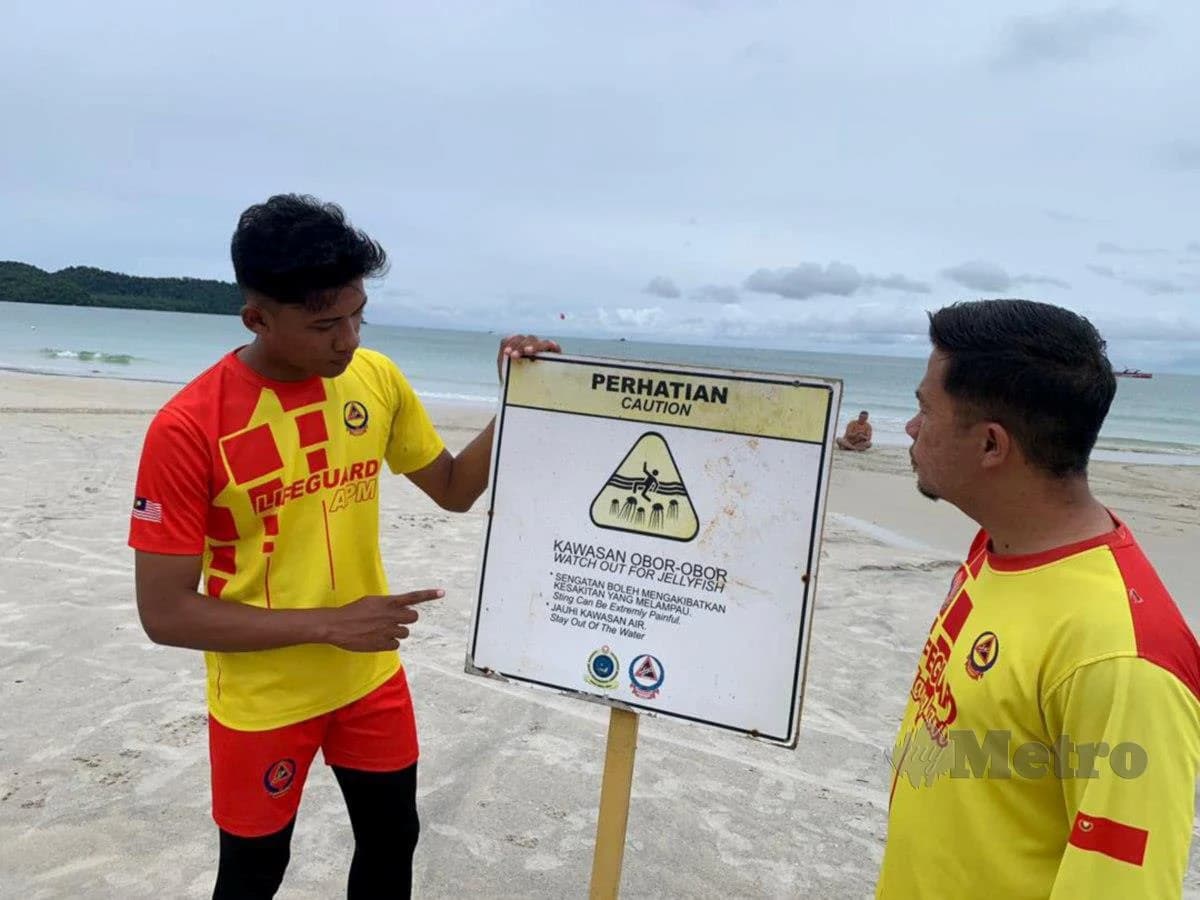
Source: hmetro
When and Where Jellyfish Appear at the Beach
Time of Day:
- Box jellyfish are not common year-round
- Highest risk: Late afternoon (12:00 PM to 7:00 PM), when 40% of stings occur
- Critical danger period: Dawn and dusk, when Box Jellyfish are most active
- Risk increases during hot months and calm seas, typically March–October
- They are more likely to appear after storms, during plankton blooms, or at dawn and dusk
- Sightings are more likely in open water than in heavily trafficked tourist beaches
Location Within the Beach: Jellyfish drift with currents and often become stranded near shore. Be especially cautious around:
- Murky water
- Floating debris
- Seaweed clusters
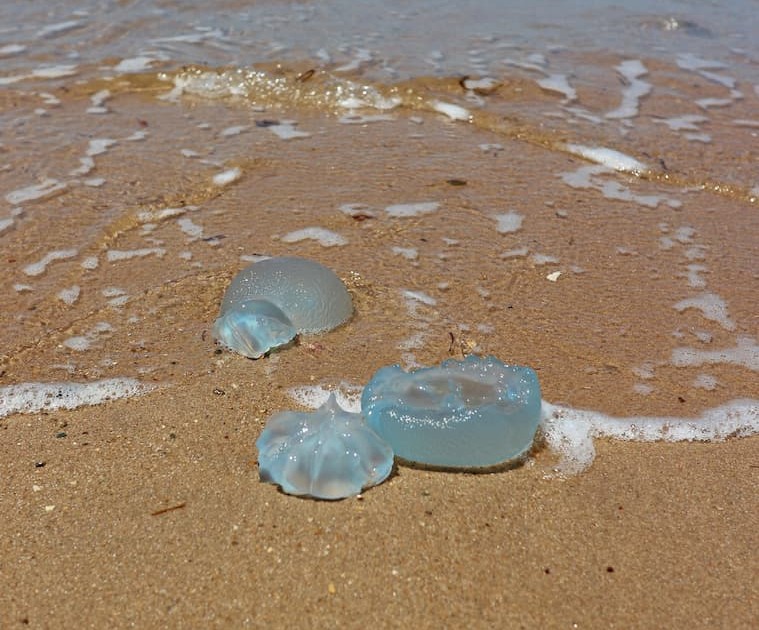
- Areas where jellyfish are washed up on sand (if you see them on the beach, they're in the water too)
How to Spot Jellyfish in Langkawi (and Why You Probably Can't)
Here's the sobering truth: most dangerous jellyfish species in Langkawi are small, transparent, and nearly invisible in water. Visual detection is unreliable.
Your best protection:
- Heed warning systems: Look for and strictly obey official warning flags and beach signage
- Check environmental indicators: Avoid swimming if jellyfish are washed up on shore
- Wear protective gear: Swim leggings or stinger suits provide a vital mechanical barrier against transparent, venomous species
- Avoid swimming during low-light hours
Symptoms of Jellyfish Sting
These are immediate and systemic signs to look out for if you or someone you know got stung by a jellyfish
Immediate/Local Signs:
- Intense, excruciating pain at the sting site
- Red skin lesions (present in 91% of cases)
- Whip-like or "frosted ladder" patterns on skin
For Severe/Systemic Symptoms (Box Jellyfish or Irukandji-like Syndrome): These may appear 20-40 minutes after a sting and include:
- Severe anxiety or feeling of impending doom
- Chest tightness (11.9% of cases) or difficulty breathing
- Abdominal pain (10.3%) or muscle cramps
- Nausea, vomiting, headache
- Restlessness and profuse sweating
- Rapid progression to cardiovascular collapse
Jellyfish Critical First Aid: What to DO
When it comes to jellyfish stings, knowing how to respond swiftly and correctly can make a critical difference. This section outlines the vital first aid steps you should follow in the event of a sting, as well as common actions to avoid that could worsen the injury.
Here what to do if someone you know got stung by a jellyfish. Speed and proper technique are life-saving. Follow these steps immediately:
- Exit the water immediately
- Call emergency services (999) without delay
- Apply household vinegar (4-6% acetic acid) to the sting area for at least 30 seconds, this neutralizes unfired stinging cells
- Remove visible tentacles carefully with tweezers or a stick (only after applying vinegar)
- Initiate CPR if the victim becomes unconscious or stops breathing
- For pain relief: Soak the affected area in hot (not scalding) water at 43-45°C (110-113°F) for 20-45 minutes
What NOT to Do If You Got Stung by Jellyfish
It’s also very important to know what you should avoid in case you have already been stung. These actions can trigger additional venom release and worsen the injury:
NEVER:
❌ Rub, wipe, or scrape the sting area with towels, sand, or cloth
❌ Rinse with fresh water or alcohol (causes nematocysts to discharge more venom)
❌ Apply urine (a dangerous myth)
❌ Engage in unnecessary physical exertion (movement spreads toxins through bloodstream)
Langkawi Emergency Number
When travelling abroad or visiting unfamiliar places, knowing who to contact during an emergency is important. In Langkawi, you can reach out to the following emergency contacts:
- National Emergency Number: 999 (Ambulance / Fire & Rescue / Civil Defence / Police / Maritime Malaysia)
- Sultanah Maliha Hospital (HSM) is Langkawi's main medical facility. However, a critical gap exists: Box Jellyfish anti-venom is not immediately available at HSM and must be sourced from the mainland or Sabah, causing potentially life-threatening delays.
- Other medical facilities in Langkawi:
- Aloes Medical Centre – Kuah
- PMC Polyclinic – Pantai Cenang
- Cenang Medical Clinic – Pantai Cenang
- Dayang Medical Clinic – Kuah
For Immediate assistance if you’re in the beach area, you can call for:
- Lifeguard stations: Reached out to patrolled areas at Pantai Cenang and Pantai Tengah (Menara Penyelamat Pantai - MPP)
- At Pantai Cenang: Contact the Watersports Centre, Horizon, or Cascade kiosks for immediate help
- Hotels: Many beach hotels keep vinegar on premises for first aid
- Driver or Car Rental Provider: They have a wide local connections and know the right people to call
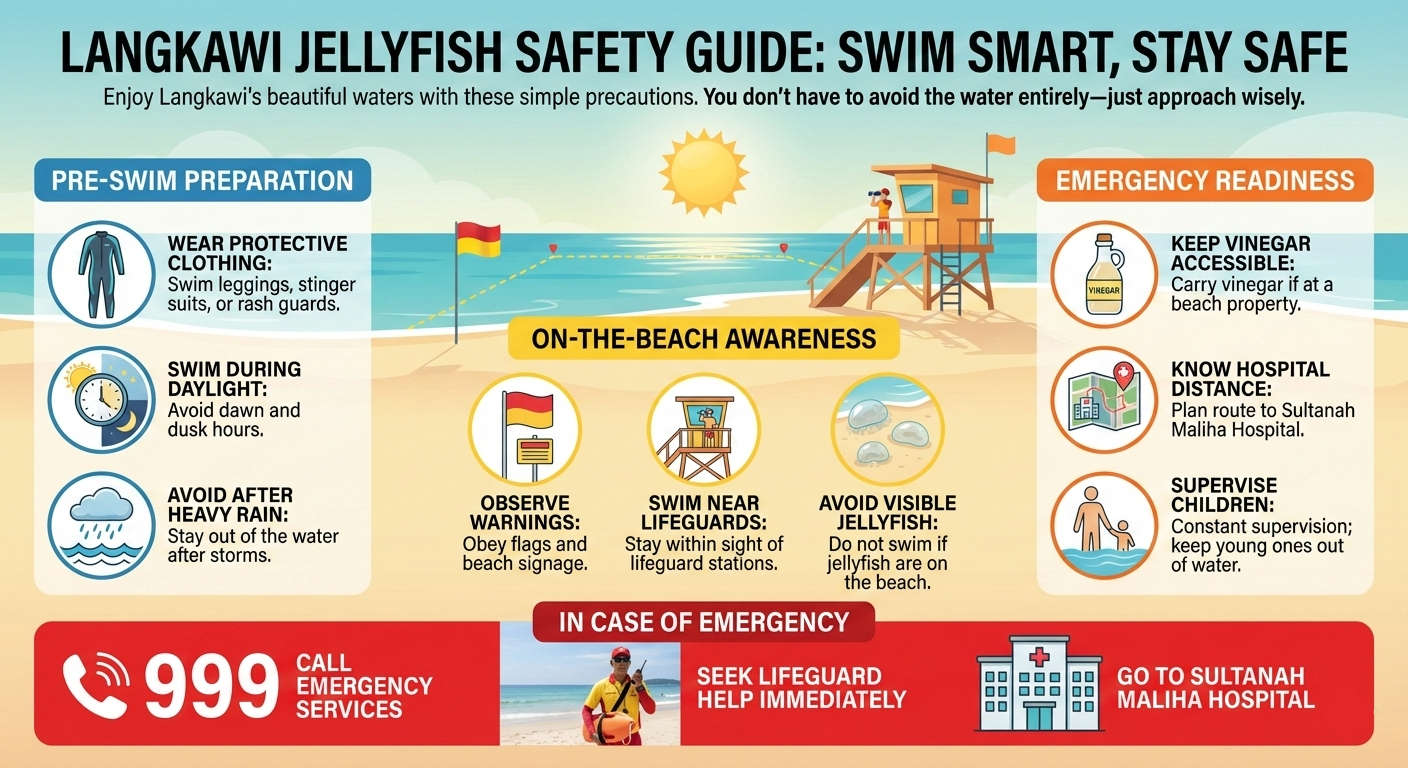
Tips for Jellyfish Safety in Langkawi
Since the Langkawi authorities take jellyfish safety seriously by actively monitoring the waters, it doesn’t mean you have to give up your watersports and beach activities. Here are some jellyfish preventive measures you can take:
- Wear protective clothing (swim leggings, stinger suits, or rash guards)
- Swim during daylight hours, avoiding dawn and dusk
- Stay away from the water after heavy rainfall
- Observe and obey all warning flags and beach signage
- Swim near lifeguard stations when possible
- Avoid swimming if jellyfish are visible on the beach
- Keep vinegar accessible if staying at a beach property
- Know your hotel's distance to Sultanah Maliha Hospital
- Supervise children constantly and consider keeping young children out of the water
Conclusion
Langkawi's beaches are stunning, and thousands of visitors enjoy them safely each year. The risk from jellyfish is real but manageable with proper awareness and precautions.
Your safety depends on three pillars: prevention (protective gear and avoiding high-risk times), awareness (recognizing warnings and environmental indicators), and rapid response (knowing exactly what to do if stung).
Remember the critical sequence if a sting occurs: call 999 immediately, apply vinegar for at least 30 seconds, and strictly avoid fresh water or rubbing the area. These actions can mean the difference between a painful experience and a tragic outcome.
With informed caution and respect for Langkawi's marine environment, you can enjoy the island's tropical paradise while keeping yourself and your loved ones safe.


Featured Post


Recent Post